Behind the Stories
Every story begins somewhere.
Many of the stories published through Rooted & Rising Stories began long before they became books — in family conversations, childhood questions, lived experiences, memories, discoveries, history, and moments that simply refused to be forgotten.
Personal Stories & Memories
-3-8-25.jpg)


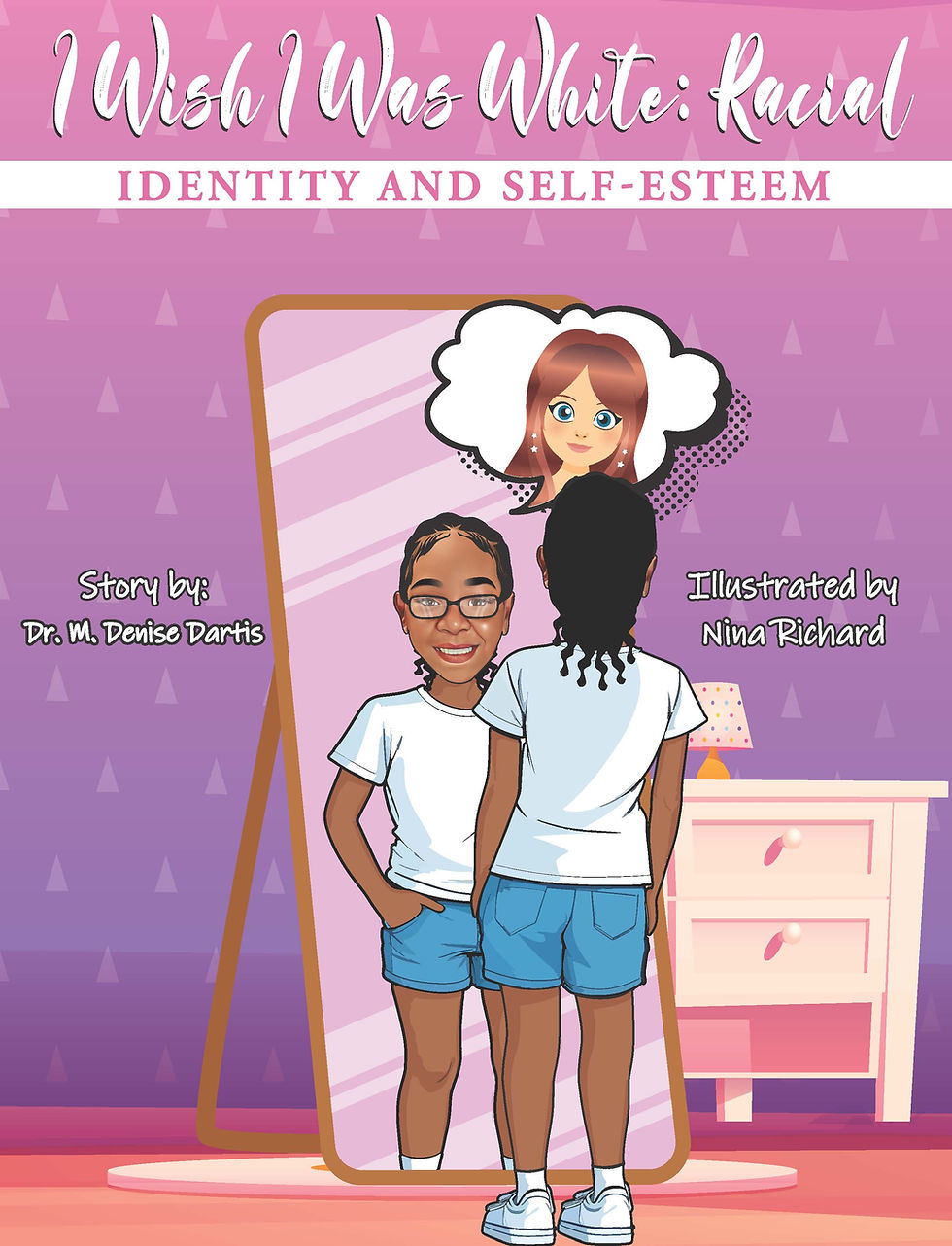
I Wish I Was White: Racial Identity and Self-Esteem
The Story Behind the Story
I Wish I Was White began with a real moment between my granddaughter Trinity and me. One day, after we walked out of a Kroger grocery store, six-year-old Trinity suddenly said, “I wish I was White.” The words stopped me in my tracks. When I asked what made her feel that way, she simply said she didn’t know.
That moment opened the door to a much deeper conversation about race, identity, self-worth, and what children can begin absorbing about themselves long before adults realize it.
From Life to Page
Once we were in the car, I talked with Trinity about her worth, about being intentionally and beautifully created, and about the strength and accomplishments woven through her own family history. I shared stories of relatives who served in the military, built businesses, overcame racial prejudice and segregation, and contributed meaningfully to their communities.
Those conversations became the foundation for I Wish I Was White—a story that uses family history, affirmation, and honest dialogue to help children question harmful messages about race and begin seeing themselves through a different lens.
Why This Story Matters
The book is about more than skin color. It is about helping children understand that their value is not determined by appearance, by how others treat them, or by whether they resemble some cultural ideal of beauty. It invites families to have conversations about race, identity, self-esteem, and the legacies children inherit from the people who came before them.
At its heart, I Wish I Was White reminds young readers that worth comes from who they are, how they treat others, what they contribute, and the character they carry into the world.
This version is the real story behind the book. And THAT is exactly what this page is supposed to preserve.
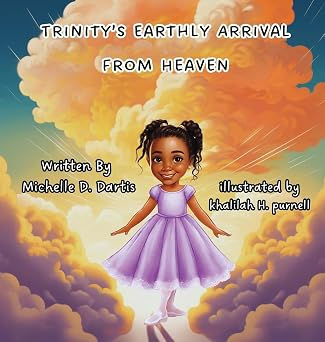
Trinity’s Earthly Arrival From Heaven
The Story Behind the Story
Trinity’s Earthly Arrival From Heaven tells the true story behind the unexpected arrival of my granddaughter, Trinity. My daughter Kelli’s journey into adulthood included painful reproductive challenges and multiple miscarriages. As her mother, I watched her experience those losses while also coming to terms with the possibility that I might never experience the joy of becoming a grandmother.
Then, following a persistent headache and a visit to St. Vincent Emergency Room, came news neither of us expected: Kelli was pregnant. Given everything that had happened before, this pregnancy felt extraordinary from the very beginning.
From Life to Page
Trinity’s story was born from that real family journey—from loss, uncertainty, fear, faith, and ultimately an unexpected new life. Because of the circumstances surrounding the pregnancy and the challenges that came before it, Trinity became affectionately known as our “Miracle Baby.”
I transformed our family’s experience into a children’s story that preserves not only the circumstances of Trinity’s arrival, but also what her birth represented to our family: hope after disappointment and possibility when we had begun preparing ourselves for a very different future.
Why This Story Matters
Trinity’s Earthly Arrival From Heaven is a story about hope, resilience, family, and the unexpected ways life can change. It acknowledges that joyful beginnings sometimes emerge from painful journeys and that families may carry both grief and gratitude within the same story.
Most importantly, Trinity’s story preserves for her—and for generations that come after her—the remarkable circumstances surrounding her arrival and the tremendous joy she brought with her.
The Curious Case of Lemon Chips
The Story Behind the Story
The Curious Case of Lemon Chips was inspired by a funny real-life moment with my granddaughter, Trinity. When she was five years old, she began asking for something she called “lemon chips.” The problem was, we had absolutely no idea what she was talking about.
The mystery continued until a trip to the grocery store finally revealed exactly what she meant. It was one of those wonderfully innocent childhood moments that stayed with me—and eventually found its way into a book.
When I transformed the experience into a story, I named the young character Paisley, a fictional little girl created as a nod to Trinity, whose childhood request inspired the story.
From Life to Page
What began as a real conversation between Trinity and her family, became a playful children's mystery. I took her mysterious request for “lemon chips” and turned it into an opportunity for young readers to wonder, guess, and try to solve the mystery alongside Paisley and her family.
The book also includes activity pages that encourage children to observe, spot differences, and use their imaginations, carrying that same spirit of curiosity beyond the story.
Why This Story Matters
ome of the best family stories are born from the smallest moments. The Curious Case of Lemon Chips celebrates the funny language of childhood, the special relationship between grandparents and grandchildren, and the joy of seeing the world through a child's eyes.
Omi’s Famous Chili & Magical Music Mix
The Story Behind the Story
Omi’s Famous Chili & Magical Music Mix grew from my love of music, cooking, and the unexpected ways different generations can connect. Omi is in her cozy kitchen preparing her famous chili while her favorite old-school playlist fills the room. She doesn't expect her five-year-old granddaughter, Maeli, to pay much attention to Omi's music.
But then Maeli hears “It Ends Tonight” by The All-American Rejects—and suddenly, she's captivated. What Omi thought belonged to her generation becomes something they can enjoy together.
From Life to Page
I built the story around a simple idea: sometimes connection happens when you least expect it. A pot of chili simmers, music plays in the background, and a grandmother and granddaughter discover that the things separating their generations aren't nearly as important as the things that bring them together.
As Omi and Maeli turn up the music, cook, laugh, and dance, an ordinary evening becomes a memory. That became the foundation for the Omi & Maeli Old School Groovetime Series—stories about the magic that can happen when one generation shares a little of its world with another.
Why This Story Matters
Children and grandparents don't have to like all the same things to find something they can share. Omi’s Famous Chili & Magical Music Mix celebrates intergenerational connection through music, food, laughter, and family traditions.
It shows how something as ordinary as preparing dinner can become extraordinary when generations are open to discovering one another. Sometimes all it takes is one song, one recipe, and one unexpected moment of connection to create a memory that lasts.
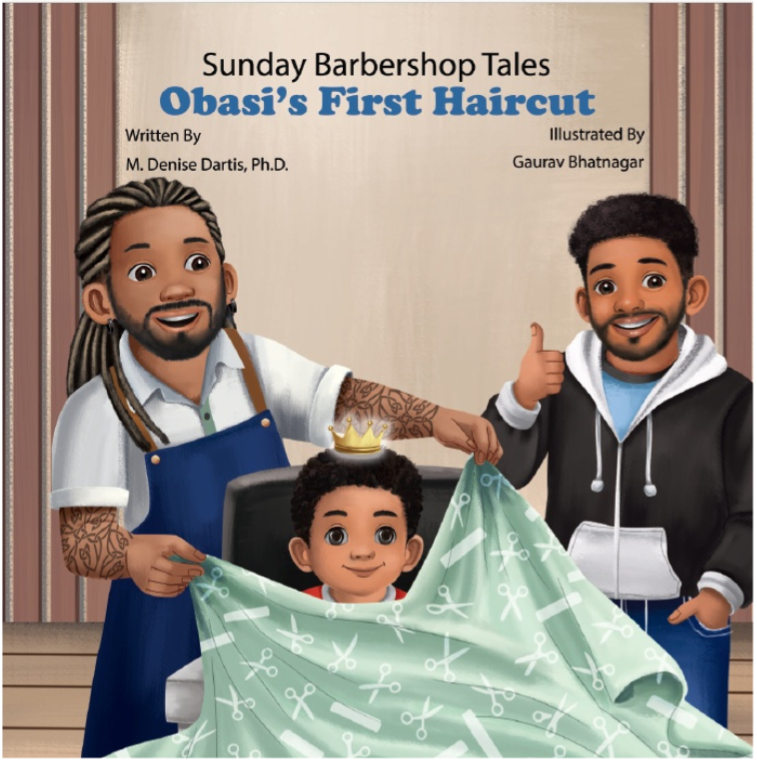
Sunday Barbershop Tales: Obasi’s First Haircut
The Story Behind the Story
Sunday Barbershop Tales: Obasi’s First Haircut began not in a barbershop, but at my vending table.
While selling my children's books at summer community events, I repeatedly heard a question from mothers looking through my collection: “Do you have any books for boys?” At the time, I had to admit that I really didn't.
Those conversations stayed with me. I wanted to create a story in which a young Black boy was not simply present, but at the center of the experience—supported, celebrated, and surrounded by positive images of Black men and community.
From Life to Page
That request from parents led me to the Black barbershop, a familiar cultural space filled with conversation, connection, mentorship, and tradition.
I created Obasi and made his first haircut the center of the story. His daddy takes him to the barbershop, where Mr. Marcus welcomes a nervous Obasi into his chair. The men around him offer reassurance and encouragement, transforming what initially feels frightening into a positive rite of passage.
The result became a story about much more than getting a haircut. It became a celebration of Black boyhood, fatherhood, community, and belonging.
Why This Story Matters
A first haircut is a childhood milestone that crosses cultures and communities. The nervousness of sitting in the barber's chair for the first time, the reassurance of a trusted adult, and the pride that comes afterward are experiences boys from all backgrounds can recognize and relate to. At its heart, Sunday Barbershop Tales: Obasi’s First Haircut is a story for all boys experiencing one of childhood’s memorable firsts.
At the same time, Black boys deserve books in which they can see themselves at the center of ordinary, joyful, and affirming experiences. By placing Obasi’s universal first-haircut experience within the culturally significant setting of a Black barbershop, the story provides representation while remaining welcoming and relatable to every young reader.
The book celebrates the barbershop as a place where generations connect, adults encourage children, confidence grows, and community is strengthened—while reminding us that some childhood experiences can connect us across race, culture, and background.
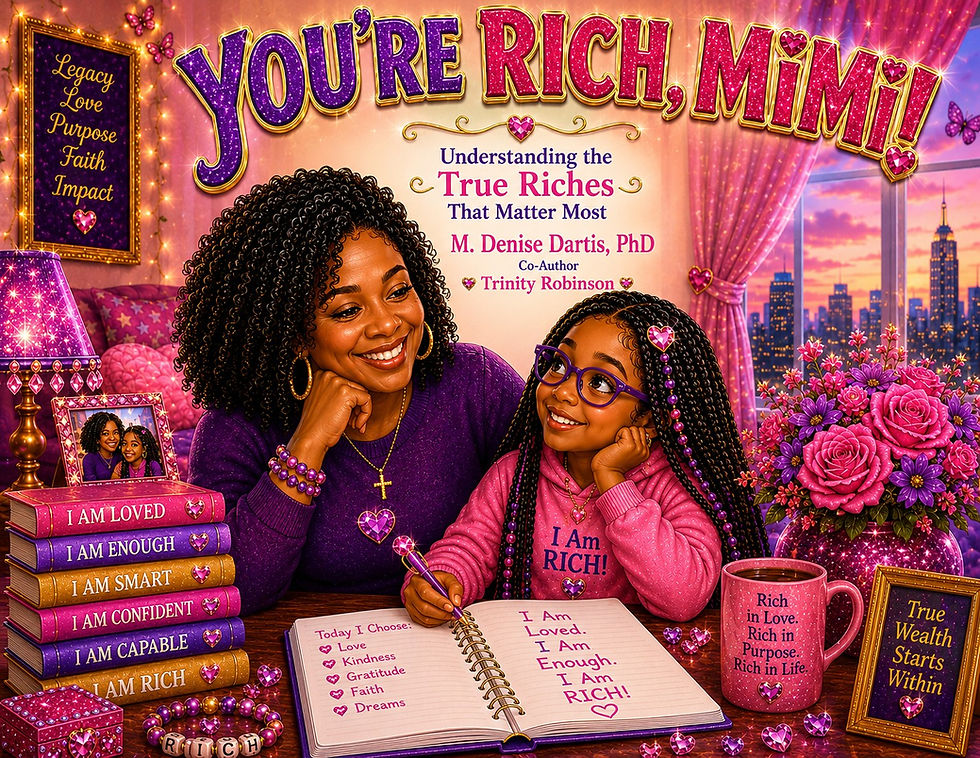
You’re Rich, MiMi!
The Story Behind the Story
You’re Rich, MiMi! began with a phone call from my granddaughter, Trinity. A gold name necklace she had received as a Christmas gift from her godmother had broken, and she called to ask if I could get it fixed.
During our conversation, Trinity announced, “You’re rich!” Then she took it even further: “You’re the richest person I know!”
I laughed because my adult understanding of my finances certainly didn't match Trinity's assessment. But in her eyes, I was rich because I was able to provide the things I needed—a bed, a dresser, a television—and because when she needed something, MiMi was someone she could call.
Her innocent declaration made me think about what being “rich” really means.
From Life to Page
That conversation became what I think of as a HeartSeed—one small statement from a child that grows into something much larger.
I took Trinity's declaration and transformed it into an intergenerational conversation about wealth through the very different eyes of a child and an adult. Trinity was thinking about the tangible things she could see, while I recognized another kind of richness in what existed between us: love, presence, consistency, support, reassurance, and knowing someone will be there when you need them.
That little phone conversation eventually grew into You’re Rich, MiMi!
Why This Story Matters
Children often see the world differently than adults, and sometimes their observations invite us to reconsider things we thought we already understood.
You’re Rich, MiMi! encourages children and adults to think beyond money and possessions when defining wealth. A rich life can also be measured in love, kindness, generosity, encouragement, gratitude, relationships, experiences, and the security of knowing that you are seen, valued, and supported.
The story reminds readers that some of life's greatest riches will never appear in a bank account—and sometimes it takes a child to remind us just how wealthy we already are.
The Boy Who Carried Stories: A Story About Family, Memory, and Becoming A Keeper of Stories
The Story Behind the Story
The Boy Who Carried Stories grew from my desire to continue creating meaningful stories centered on boys while also preserving family history, cultural heritage, and legacy.
The setting was inspired by Winchester, Tennessee, my father's hometown, making the story personally connected to my own family roots. Even the main character's name, Kofi Alfred Darté, carries that connection. “Alfred” honors my father, while “Darté” is a tribute to the Dartis family name.
In many ways, this book became a love letter to my family, Winchester, and the stories that connect one generation to the next.
From Life to Page
I transformed those family and ancestral connections into the story of Kofi, a young boy who spends time with Nana Pearl and Papa Alfred, studying old family photographs, listening to memories and sayings, and recording what he learns in his notebook.
As Kofi discovers, photographs can show us faces and places, but stories tell us who people were—where they came from, how they lived, what they valued, and the love they carried.
I also intentionally wove African heritage and symbolism throughout the story, including the Yoruba concept of Akọ̀wé Ìtàn—“keeper of stories”—and the idea that stories themselves are part of our inheritance. Kofi's journey ultimately reaches beyond Winchester to the family's ancestral past and Mandla Darté, an ancestor said to have carried stories from the family's homeland in Namibia.
Why This Story Matters
The Boy Who Carried Stories teaches children that family stories are more than entertaining memories. They are pieces of history, identity, culture, and the people who came before us.
The story encourages children to ask questions, listen to their elders, explore old photographs, learn where their families came from, and recognize that they have a role in keeping those memories alive.
It also celebrates literacy, curiosity, cultural pride, and intergenerational learning while introducing children to a powerful idea:
Stories are an inheritance—and every generation needs someone willing to carry them forward.

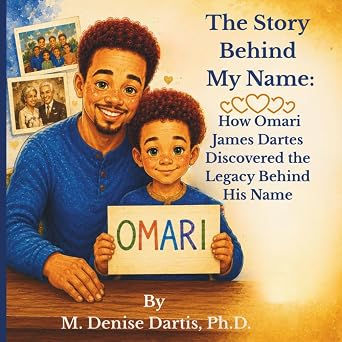
The Story Behind My Name: How Omari James Dartes Discovered the Story Behind His Name
The Story Behind the Story
The Story Behind My Name: Omari James Dartes grew from my desire to create meaningful stories about boys, family, identity, and belonging. I had also heard from mothers who wanted to see more books featuring boys and stories that could spark meaningful conversations between children and the adults who love them.
At the center of this story is a simple question with the power to uncover an entire family history:
“Why did you give me my name?”
Through Omari's question, the story explores the idea that a name can be much more than something we are called. It can carry a story, a history, and a connection to those who came before us.
From Life to Page
I turned that simple question into Omari's journey of discovery. As he learns more about his name, he begins to understand that knowing where our names come from can also help us understand who we are, where we come from, and how we fit into a larger family story.
The book uses the intimate conversation surrounding Omari's name to invite young readers into something much bigger: exploring family history, asking questions of parents and grandparents, and discovering the people, places, traditions, and experiences woven into their own identities.
Why This Story Matters
Children deserve opportunities to understand that their identities did not begin with them. Their names may hold family memories, cultural traditions, hopes, love, and history that reach across generations.
The Story Behind My Name encourages children to become curious about those connections and, most importantly, to go home and ask:
“Why did you give me my name?”
That one question can begin a conversation that reveals an entire family story—and give a child an even deeper understanding of identity, heritage, and belonging.
Omi’s Purple Pancakes & Purple Vibes
The Story Behind the Story:
Like the first Omi & Maeli story, Omi’s Purple Pancakes & Purple Vibes was inspired by real moments between Trinity and me. Our time together has always included those ordinary experiences that somehow become memorable—the conversations, laughter, food, music, and little traditions that develop between a grandmother and granddaughter. This story grew from those moments and from my desire to preserve them through Omi and Maeli.
From Life to Page:
I took the familiar experience of making pancakes together and gave it the Omi and Maeli treatment—purple pancakes, purple vibes, music, laughter, and plenty of personality. What begins as an everyday moment in the kitchen becomes another opportunity for Omi and Maeli to enjoy one another, create memories, and demonstrate the special relationship that inspired the series.
The characters may be Omi and Maeli, but the heart of their relationship comes directly from the bond Trinity and I share.
Why This Story Matters:
Some of the memories children carry with them for life are created during the simplest moments. Making breakfast, listening to music, laughing in the kitchen, or spending an unhurried Saturday morning together can become part of a family's story.
Omi’s Purple Pancakes & Purple Vibes celebrates the importance of grandparents being present, playful, and connected with their grandchildren while reminding families that meaningful traditions do not have to be elaborate. Sometimes all you need are pancakes, music, a little imagination—and somebody you love spending time with.